
What to Send a Recruiter Besides Your Resume
Resume not enough? Here's what to actually send a recruiter besides your resume — LinkedIn, portfolios, personal sites, interactive profiles — and what works best.
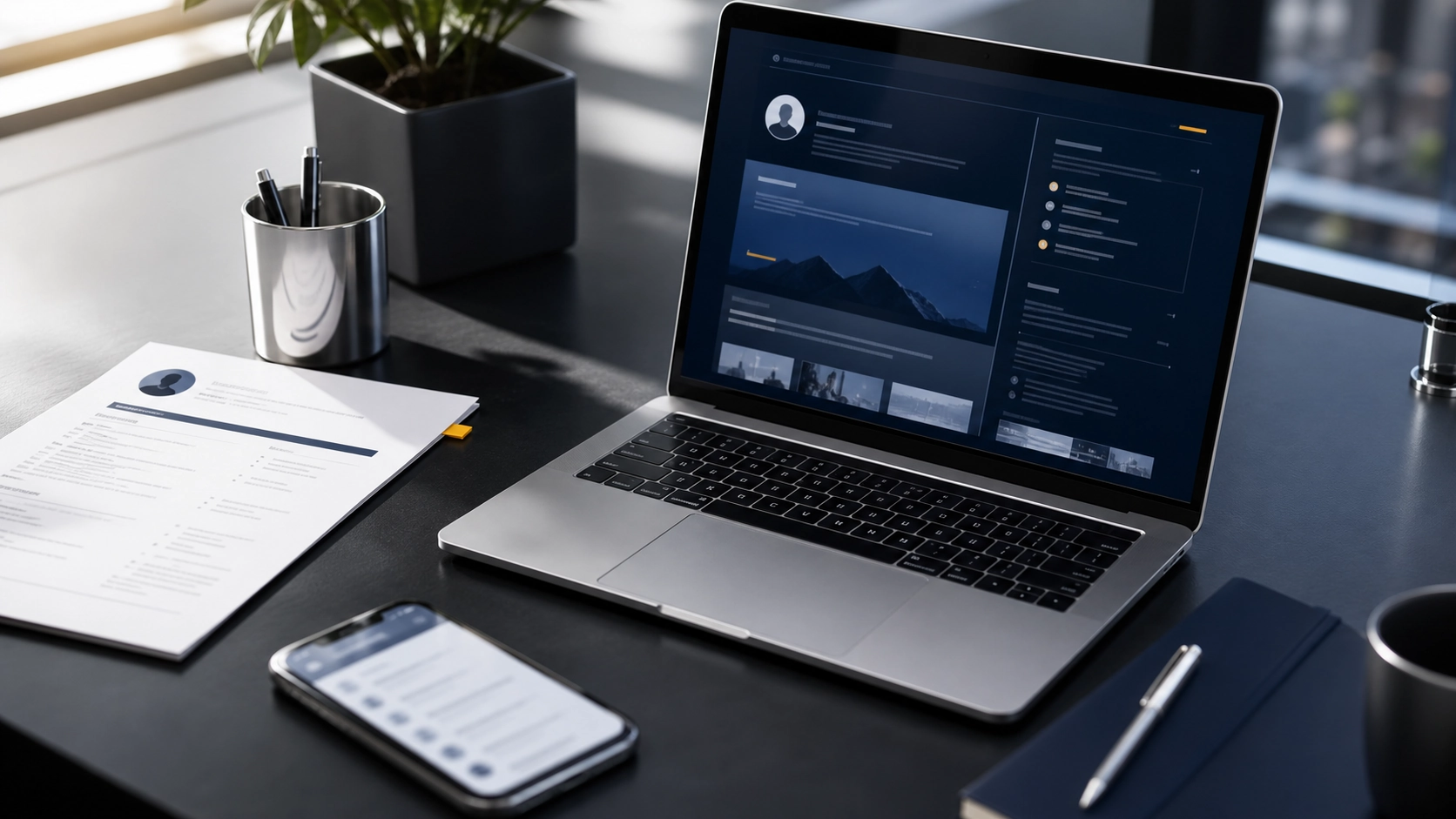
You've sent the resume — maybe a few dozen of them. And somewhere in there you started wondering whether a one-page PDF is really doing you justice. Whether there's something more you could put in front of a recruiter that actually shows who you are.
It's a good instinct. A resume is a summary, and summaries flatten people. Recruiters skim them in seconds, the one-page convention forces you to cut the context that makes your experience make sense, and yours ends up looking a lot like everyone else's in the pile.
So what can you actually send besides a resume? Here's an honest rundown — what each option is good for, where it falls short, and what genuinely moves the needle.
Your LinkedIn profile
This is the default, and recruiters will look at it whether you send it or not, so it's worth keeping sharp: a strong headline, a real "About" section, recommendations that vouch for you. The upside is social proof and a fuller work history than a resume has room for.
The catch is that everyone has one, and they mostly look the same. LinkedIn's format flattens you into the same template as every other candidate, you don't control how you're presented, and the clutter — who's celebrating a work anniversary, who's "open to work" — buries the parts that matter. Treat it as table stakes, not a differentiator.
A cover letter
A good cover letter does one thing a resume can't: it tells a story. It connects the dots between where you've been and the role you want, and it signals genuine interest in this job rather than a mass application.
The problem is that most cover letters go unread, and the ones that do get read are usually generic enough to add nothing. If you write one, make it specific — a few honest sentences about why this role and what you'd bring beats three paragraphs of "I am a results-driven professional." Just don't expect it to carry the weight on its own.
A portfolio
For designers, writers, developers, and anyone whose work is visual or tangible, a portfolio is the single most convincing thing you can send. It replaces claims with evidence — instead of "led a redesign," recruiters see the redesign.
The limits are obvious: it only works if your work is portfolio-able, it takes real time to build and maintain, and for a lot of roles — sales, ops, finance, people management — there's simply nothing to put in one. If you have a portfolio, lead with it. If you don't, don't force it.
A personal website
A personal site gives you something a resume never will: control. You decide what's front and center, you can house your resume, portfolio, writing, and contact info in one place, and the mere fact that you built one signals initiative.
But it's a real project, it can drift into a vanity exercise, and there's a clicking problem — though not the one you'd think. The issue isn't that recruiters never click links; it's that most personal sites don't make the payoff obvious fast enough. A personal site is a great destination to point people toward once they're interested; it's a weaker tool for earning that interest in the first place.
Work samples or case studies
A short, well-chosen sample — a deck you built, a case study of a project you ran, a writing sample — is concrete proof that cuts through a lot of skepticism. One genuinely impressive artifact can do more than an entire resume.
Watch two things: confidentiality (never send anything proprietary), and curation (one sharp example beats five mediocre ones). This works best when it's tailored to the specific role.
A short video introduction
A 60-to-90-second video lets a recruiter get a sense of your personality and communication style in a way text can't, and it's still uncommon enough to stand out.
It's also a production effort, plenty of people aren't comfortable on camera, and there's no guarantee anyone watches it. For a customer-facing or communication-heavy role, if you're comfortable on video, it can be a real edge. Otherwise it's optional.
An interactive career profile
This is where an interactive career profile fits — and it's the gap we built Worksona around.
Your resume is just the starting point. From there, Worksona helps you build a profile with the context a one-page document never had room for — success stories, endorsements, projects, interests, and the personality behind the bullet points. But unlike a personal website or portfolio, it doesn't just sit there waiting to be read. Recruiters can ask questions, explore the parts they care about, and get a fuller picture of you in the exact moment your resume would usually get skimmed and forgotten.
It's the difference between handing someone a document and giving them a conversation. A recruiter wondering "has she actually managed a team this size?" or "what was his real role on that launch?" gets an answer on the spot — even at 11pm, even when you're asleep.
What to actually send — and when
You don't need all of the above. The practical move is to send your resume and one richer thing, matched to the situation:
- Always keep LinkedIn sharp — it's getting checked regardless.
- If your work is tangible (design, writing, code), lead with a portfolio or one strong sample.
- For everyone else, the highest-leverage add is a single link that lets a recruiter go deeper if they're interested — without making them dig for it. Low friction is the whole point: give them an easy way in, and let the genuinely curious go as far as they want.
And when you include that link, keep the framing light — you're offering more, not demanding more attention. Something like:
"I've attached my resume, and I've also included a link to an interactive profile here if it's helpful — it gives a fuller picture of my background, projects, and how I think through problems."
That's a low-pressure way to point a recruiter toward something richer without making your resume feel insufficient.
The goal isn't to pile on attachments. It's to give a recruiter one more way to see the person the resume can't quite capture.
The bottom line
A resume will always be part of the process — but it was never meant to carry the whole weight, and in a stack of near-identical PDFs it rarely does. The candidates who stand out are the ones who give recruiters something more to engage with.
If you want to give them something they can actually explore — and that answers their questions even when you're offline — that's exactly what Worksona was built for. Create your profile and give recruiters something richer than a PDF alone.


Career insights, straight to your inbox
Occasional, no-spam notes on standing out, the job search, and what we’re building at Worksona.
No spam. Unsubscribe anytime.